
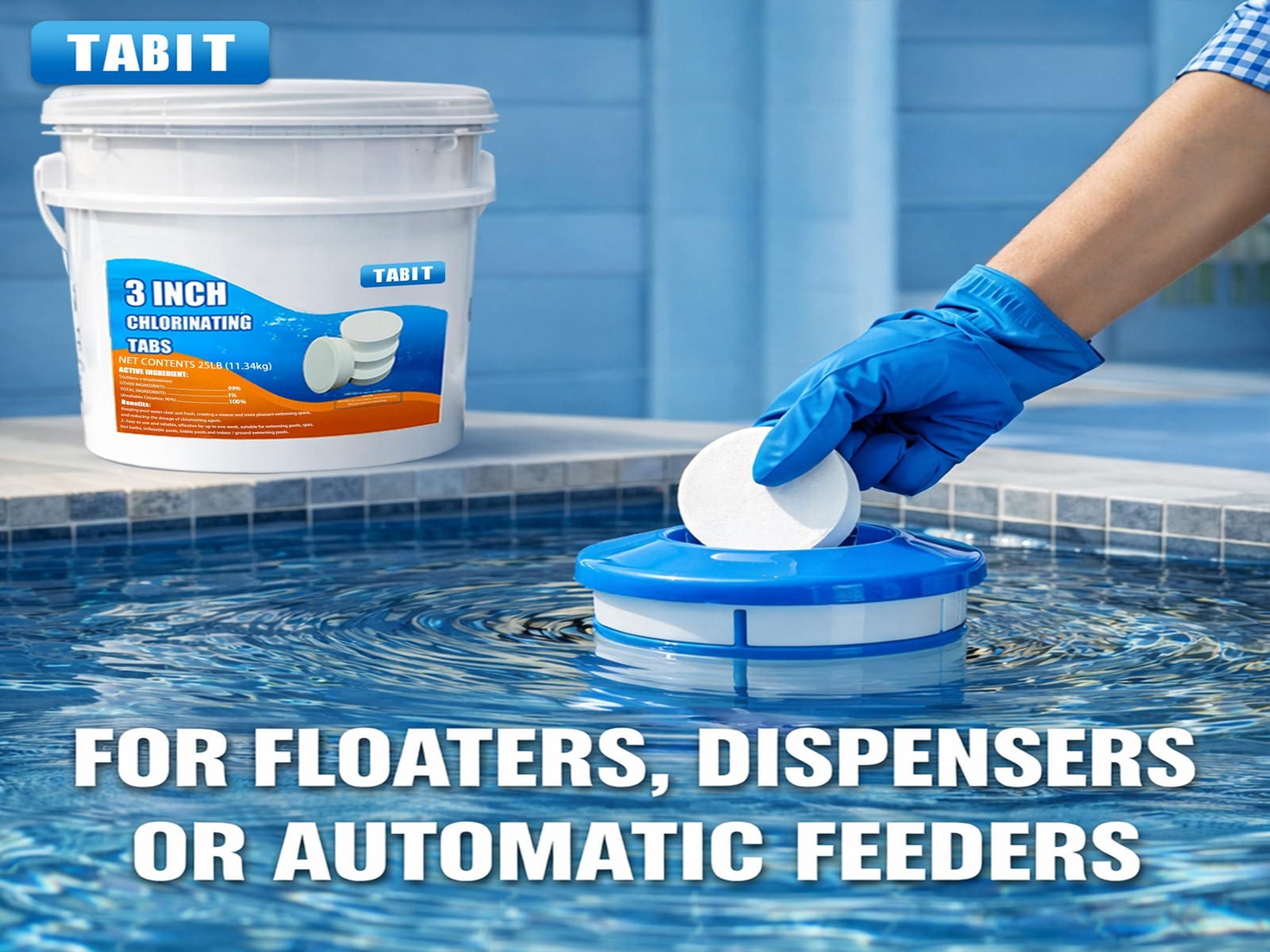
Swimming pool treatment is the process of keeping pool water clean, clear, hygienic, and safe for swimming. It involves water testing, chemical balancing, filtration, circulation, and regular cleaning.
1. Main Swimming Pool Treatment Processes
1. Water Testing
Test the water regularly for chlorine, pH, total alkalinity, and other relevant parameters to determine which adjustments are needed.
2. Chlorination and Disinfection
Use an appropriate chlorine-based disinfectant to control harmful microorganisms. Maintain free chlorine within the range recommended for your pool and disinfectant, commonly 1–3 ppm for many residential pools.
3. pH and Alkalinity Balancing
Keep pH within the recommended range, commonly 7.2–7.8. Proper alkalinity helps stabilize pH and improves disinfectant performance.
4. Filtration and Circulation
Run the circulation system according to the pool's design and usage. Clean or backwash the filter as required to remove suspended dirt and maintain water clarity.
5. Pool Cleaning
Brush the walls and floor, vacuum debris, empty skimmer baskets, and remove leaves and other contaminants.
6. Shock Treatment When Necessary
Apply an appropriate oxidation or shock treatment when indicated by water testing or heavy pool use. Follow the product label and keep swimmers out until the water meets the required safety limits.
2. Common Swimming Pool Treatment Chemicals
| Chemical | Main Purpose |
|---|---|
| Chlorine tablets or granules | Disinfects pool water |
| pH increaser (soda ash) | Raises pH |
| pH reducer (acid-based product) | Lowers pH |
| Sodium bicarbonate | Raises total alkalinity |
| Calcium chloride | Raises calcium hardness |
| Cyanuric acid | Stabilizes chlorine in outdoor pools |
| Pool clarifier | Helps filtration remove fine suspended particles |
| Algaecide | Helps control algae when appropriate |
Choose products according to your water test results and the manufacturer's instructions. Not every pool needs every chemical.